
The Slovenian pilot under LABOUR-INT III focuses on tackling persistent challenges in labour market access for migrants, especially women, by reinforcing support structures and improving access to legal and employment-related information.
Led by the national public employment service (ZRSZ) in cooperation with the national trade union confederation (ZSSS), the initiative introduces a “Global Classroom” model, a network of help desks and institutional actors that provide coordinated support, rights-based guidance, and counselling to third-country nationals. Key activities include:
- targeted training sessions for migrants,
- dissemination activities and
- development of a joint contact point in Ljubljana.
Actions implemented by ZRSZ
The pilot project in Slovenia aims to reduce vulnerability to exploitation, improve institutional cooperation, and promote fair access to the labour market for migrants, including those with low levels of formal education or limited knowledge of Slovenian language.
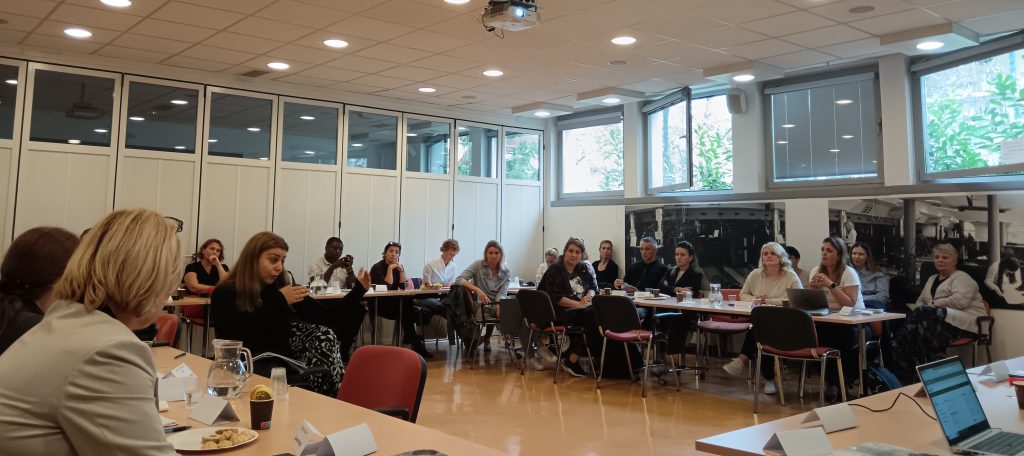
In September 2024, ZRSZ organized the Expert Meeting about establishing the “Global Classroom” network, the first national-level public event of the LABOUR INT III project in Slovenia. The meeting facilitated discussions on Slovenia’s labour market, the integration of third-country nationals, and the importance of a multi-stakeholder approach involving State institutions, employers and trade unions, and civil society organizations.
Following the meeting, the Global Classroom network was formally established in June 2025, on the day of the National Dissemination Conference held at the EU House in Ljubljana. The event brought together key stakeholders in the field of employment and integration of migrants in Slovenia, along with organizations, institutions and experts in the field, and it was organized to:
- strengthen cooperation between different actors,
- exchange good practices,
- encourage equal cooperation and open communication, and
- form a joint national Global Classroom network that will support the successful integration of migrants into the labour market in Slovenia.
In this context, the Global Classroom network includes an extensive range of organizations committed to supporting and facilitating migrant integration, and it functions as a collaborative platform for knowledge exchange, joint problem-solving, and delivery of legal and practical support to migrant workers. The establishment of this network underscores the project’s commitment to fostering an inclusive, collaborative, and sustainable approach to migrant labor integration in Slovenia.
Integration of Migrants into the Labour Market: Ten Trainings Successfully Held Across Slovenia
The Public Employment Services of Slovenia have successfully carried out ten trainings under the title “Integration of Migrants into the Labour Market”, organised within the framework of the European project LABOUR-INT III between February 2025 and May 2026.
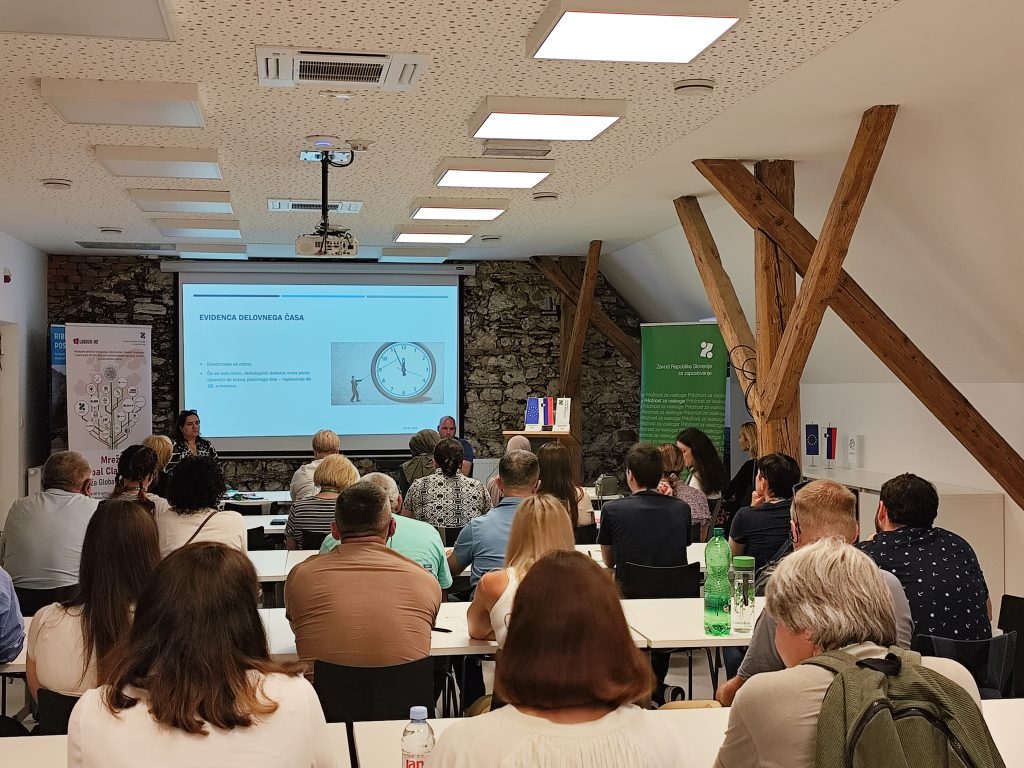
The trainings aimed to provide participants with practical information on access to the Slovenian labour market, legal bases for employment, rights and obligations at work, ethical employment, and available support mechanisms. They also addressed broader integration challenges, including intercultural dialogue, social inclusion and the importance of direct contact with institutions supporting migrants’ integration pathways.
The trainings took place in different cities in Slovenia; Ljubljana, Nova Gorica, Celje, Postojna, Maribor, Novo mesto, Kranj and Velenje, bringing together experts and participants to discuss opportunities, challenges, and good practices in integrating migrants into the labour market and broader society. They featured representatives of key institutions and organisations working in employment, integration, and intercultural dialogue, including the Employment Service of Slovenia, the Labour Inspectorate, the Association of Free Trade Unions of Slovenia, UNHCR, IOM, the Peace Institute, the Red Cross of Slovenia, Društvo Ključ, the Institute of Criminology at the Faculty of Law (University of Ljubljana), ZRC SAZU, Ambasada Rog, and Slovene Philanthropy.
Discussions focused on the legal aspects of employing migrants, refugees, and asylum seekers, the challenges of ethical recruitment, and the importance of intercultural competences for successful integration. Particular attention was also given to identifying violations of labour legislation and exploring ways for institutions and employers to jointly create a more inclusive working environment.
A key added value of the trainings was the inclusion of personal testimonies from migrants and refugees, who shared their own experiences of integration into Slovenian society and the labour market. These contributions helped make the sessions more concrete and relatable, while also highlighting practical barriers and success factors in integration processes.
A total of 363 participants attended the training, 222 of whom were women and 141 men. To enhance accessibility and comprehension, interpretation into foreign languages was provided. The events were also attended by staff members from the regional offices of the Employment Service.
Vocational training for migrant workers as Home Social Care Workers
Between May and July 2026, 14 third-country nationals completed a 150-hour training programme in Ljubljana to become Home Social Care Workers, one of the most sought-after professions in Slovenia. All participants completed the training and obtained the National Vocational Qualification (NPK) certificate, which allows them to work in this profession. The training was organised by the Employment Service of Slovenia (ZRSZ) with members of the Global Classroom Network, including the Government Office for the Support and Integration of Migrants and non-governmental organisations. The programme was free of charge for participants and took place on weekends at the Cene Štupar – Ljubljana Adult Education Centre, combining theoretical and practical components. Most participants were already employed, often as support staff in care institutions, and many held healthcare-related education from their countries of origin that was not formally recognised in Slovenia. The qualification now gives them access to a recognised profession that matches their skills and experience. This improves their employment prospects, working conditions and long-term career development in Slovenia.